Antonietta D'Angelo
It’s been 10 years since I first arrived in Japan, and I’m still reflecting on why I return each year. You don’t just arrive in Japan; you’re transported. Japan felt like a fairytale. My partner, David, insisted I experience it after his snow trip to Niseko, fresh out of high school. I didn’t understand until I went. The place overwhelms your senses. Coming from Melbourne, quiet and perhaps a bit pretentious, Tokyo was like stepping into high-definition life.
We did the obvious things since it was my first time. I don’t regret it. Sometimes clichés are necessary. We ate our way through konbini shelves, conducting egg sando research and trying every canned coffee. Why not? We got lost in Shinjuku Station and then felt proud to find the surface. We watched Kyoto commuters move with quiet choreography. We traced mossy temple paths until my thoughts finally quieted.
However, seeking a deeper layer of experience, we decided to leave space in our itinerary for a smaller destination. This choice felt like the natural next step after immersing ourselves in the classic sights. Somewhere that would knock off our “first-timer” labels and actually explore a little. North of Kyoto, the map showed a seaside town called Kinosaki Onsen, famous for hot springs and wooden lanes, where guests shuffle along in yukata and geta. At the time, it still felt a little off the beaten path. That’s what we told ourselves, anyway.
The Kinosaki train felt smaller, local, and quieter than Kyoto’s. On the platform, a man waved, holding a small sign with our names. He worked at the ryokan and said he would drive us in. From the first sentence, he was all warmth. He asked about our flight, about Melbourne’s winter, and about how long we’d wanted to visit Japan. Then he told us about his own travels—stories with battered edges, the sort that prove a person has lived. “I’m happy you’re staying with us,” he said, and the way he said it felt like an invitation to exhale.
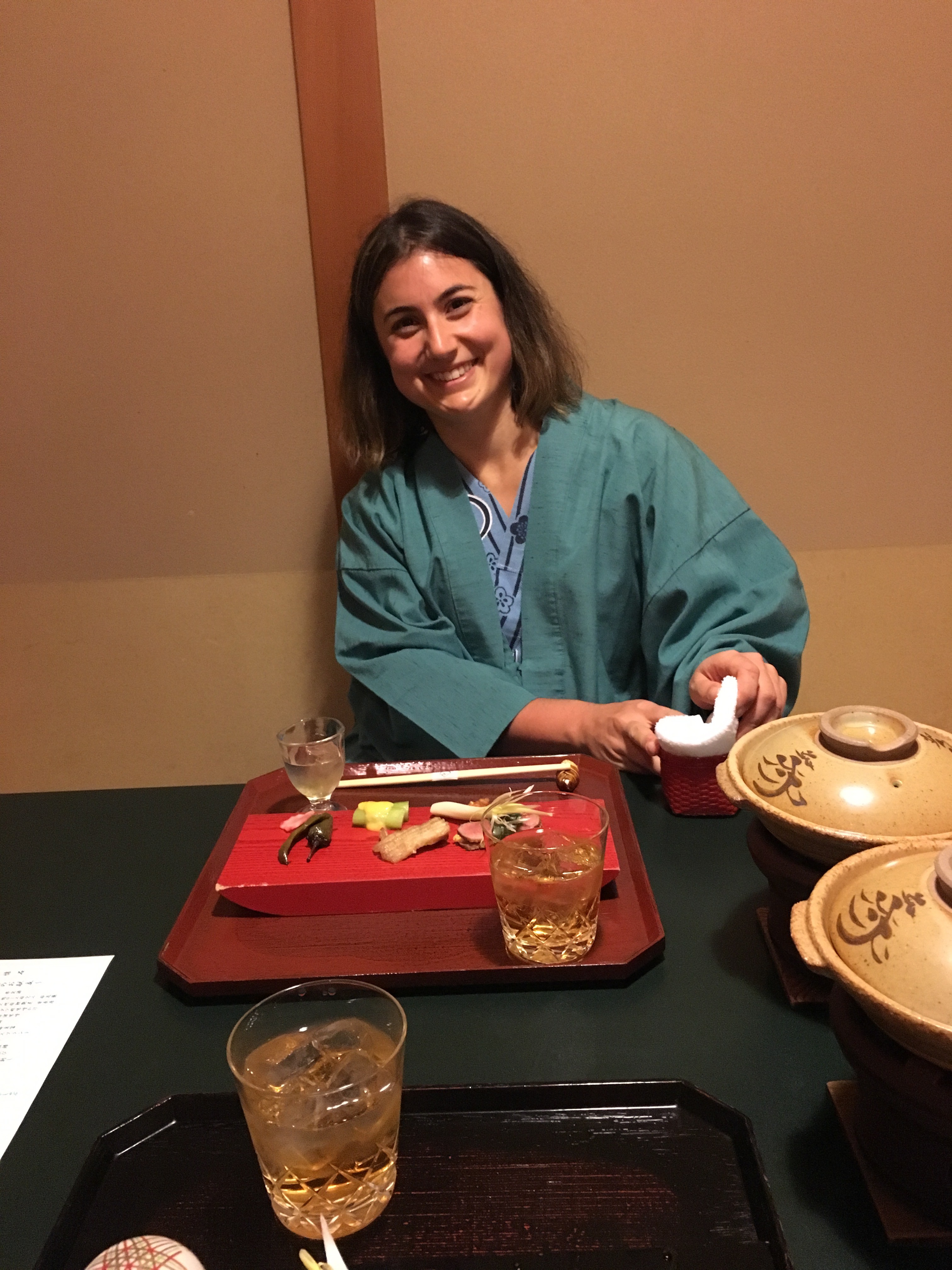
The ryokan was the kind of place that steadies you the moment you cross the threshold. Tatami. The faint, clean whisper of rice straw. Slippers lined like punctuation. Staff who moved with a practised lightness, balancing grace with a kind of practical kindness that felt like family. Our host took us through the ritual of staying in a ryokan. She showed us which way the yukata should go, that our futon would be ready for us in the evening, and the logic of the tea tray. It wasn’t fancy; it was attentive. That’s rarer. My name was written in hiragana on the door, and I felt truly welcome.
We built our little Kinosaki itinerary around the sea, castles, warm baths, and regional meals that are actually about place. We hired a car so we could be free to explore along the coast. Our first stop was Cape Onmachi, which was a craggy, decisive coastline that had amazing views and a marine park. Given that we had arrived from the depths of Melbourne’s winter, we decided to find a beach to enjoy the warmth on our skin for a while. We came upon Takenohama Beach, where we laughed and swam, feeling our bones actually warm up for the first time in a while. The beauty of a rental car is the ability to explore and stop when something catches your eye. We felt free and able to go at our own pace. We ate lunch at the Kinosaki Country Club, which had a beautiful view and a clean, simple taste. The next morning, we rose before the sun and drove to Takeda Castle, the so-called “castle in the sky,” where the mist held the ruins like a secret it wasn’t ready to give up. If you want to understand why people stay in Japan for decades and still don’t feel finished, stand there and watch the clouds refuse to be told what to do.
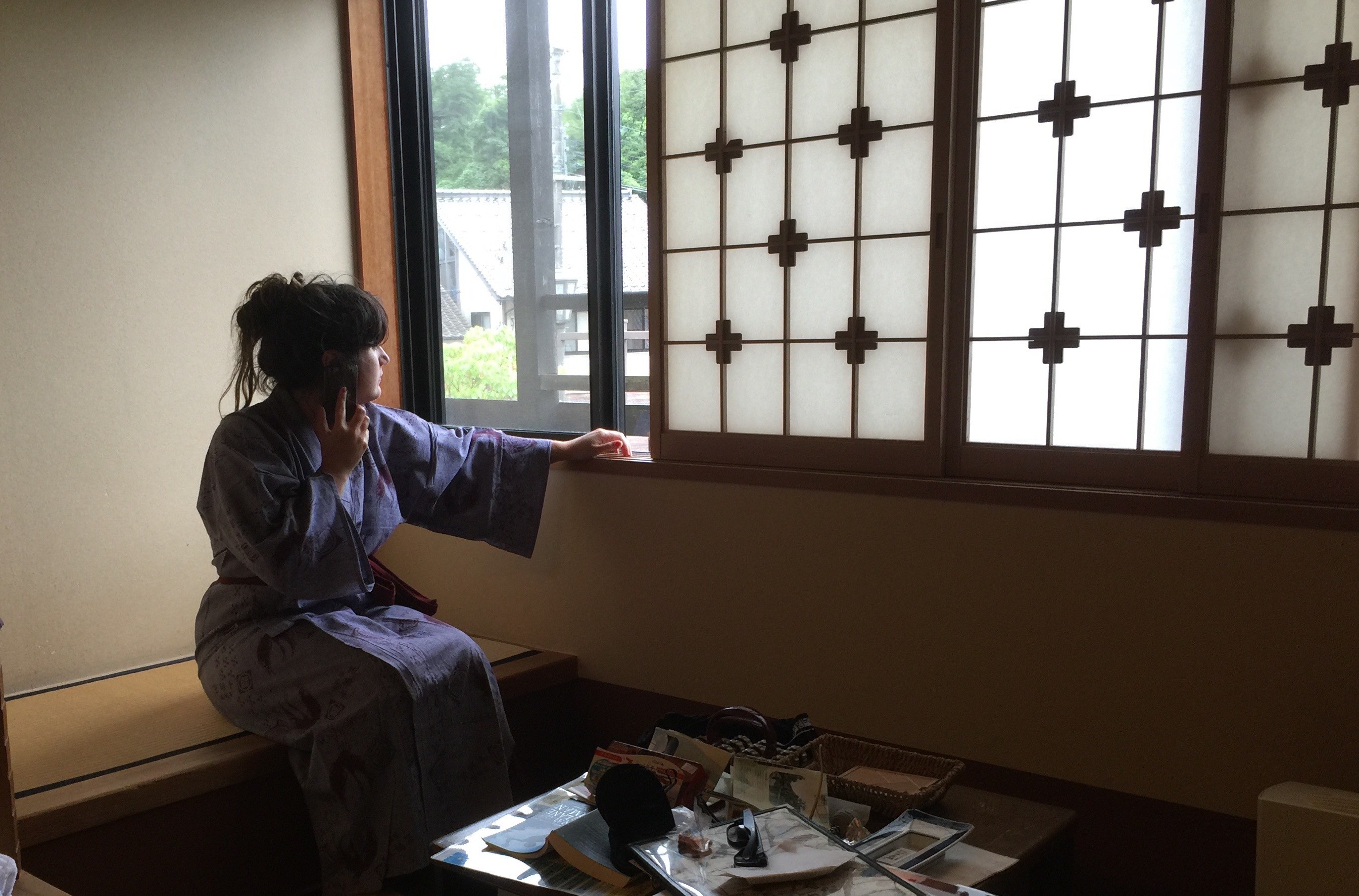
And then, of course, the baths. The onsen circuit in Kinosaki is like an old story retold each night: wooden bridges, lanterns, steam lifting off the surface like the day shrugging off its weight. I stripped, as you do, because there’s no other way to do it. I had looked up the proper etiquette, but was still so nervous. If there’s a moment in adulthood where you realise your body is your home, not your performance, it might arrive in a public bath in a town you only learned about a month before. I laughed at myself in the mirror, held my breath, and stepped in. No one made me feel nervous or unwelcome. I was greeted with a warm smile and a nod, and we each enjoyed the moment in peace. The water asked for nothing except honesty. I sank. I let it soften the corners I had made during my medical studies and first year of internship. When I got out and wrapped myself in the robe, clean and loose, I got back to our room... my phone rang.
It was my mum. Her voice had the sound I know and hate: the tightness that tries to hold the facts together. My Nonno had been in an accident. He was in the ICU. We needed to come home now, to say goodbye. There are phone calls that rearrange your trip. And then there are phone calls that rearrange your sense of who you are. This was both. I told David, and we moved from warm wood and steam into that strange crispness where you can feel your life pivot. The itinerary in my head dissolved, and I went into doctor resolution mode. We walked to the desk. We explained, simply. The staff didn’t tilt their heads or shuffle papers or make sympathetic noises that live in the no-one’s-fault bin. They did something rarer: they acted.
“You must go,” they said. “Family first.” They cancelled our remaining three nights and processed a full refund before we could ask a question. “We will drive you.” They called the car rental company; refunded. They phoned the station to check the next trains; they annotated our route on a little map with neat, deliberate strokes. And then—the detail that permanently branded Kinosaki onto my heart—the same driver who’d welcomed us on arrival turned up at the rental car place and drove us to the station himself. He barely knew us. He just… showed up.
I’ve heard the cynicism about Japanese politeness: a country built on saving face, courtesy as armour. I get it. But this wasn’t that. This was genuine. No scripts, no performative bows, no transaction calculus. Nobody owed us anything. They acted because they could shorten our suffering by two centimetres, and they did. I can't claim to decode this culture, only to receive its grace. In acknowledging my outsider's lens, I understand that my interpretation is only a fragment of a much larger story, one that invites us to reflect on our own biases and assumptions.
We rode the trains back to Osaka, numb with a head full of plans, flights, seat selections, and the worst kind of arithmetic: hours until home versus hours left to say goodbye. If you have ever moved through crowded places while your private world collapses, you’ll know the sick geometry of it. The platform announcements continue. The drink machines hum. You exist as a soft-edged ghost among people late for ordinary things. We still had to go out to eat and catch the train with the commuters just doing their daily grind.
We made it back to Melbourne in time. We said the words you hope you’ll have the right to say: thank you, I love you, I’m here. Grief is strange. I felt I had been propelled back to real life. Was Kinosaki just a dream? The blurry neon lights of Tokyo, the taste of fresh seafood, the smell of a seaside town, the warmth of a hot bath, and a drive to a station with a man who refused to let us carry everything alone.
That trip could have become the story of “the holiday that got ruined.” It didn’t. It became the story that knocked a hole in my certainty about travel itself. The point isn’t to collect places like stamps or to tick boxes. The point is to practice belonging, wherever you are, by paying attention and by being soft enough to receive the moments that are offered. Kinosaki taught me that. Or maybe it reminded me.
Back home, on nights when the house is finally quiet, and the baby monitor casts that watery glow, I think about the town. I read that the ryokan has since closed and been demolished. It shouldn’t matter, but it does. We pin our memories to buildings as if timber can guarantee permanence. It can’t. But the people, and what they choose to do in the precise minute you need them—those moments become the architecture.
When I returned to Australia, I started to notice kindness more aggressively. I mean that word: aggressively. I still look for it. You can find it everywhere; it was obvious once I committed to seeing it. A barista who slipped an extra shot of coffee to a tired parent. A stranger who caught a pram wheel at the top of a tram step. A neighbour who pulled our bins in when the rain turned sideways. The scale didn’t matter. The pattern did. The week in Japan taught me to collect these as deliberately as I collect stories.
If this were a neat essay, I’d tell you we returned to Kinosaki a year later and found the exact driver and cried in the middle of a laneway because life had stitched itself closed. We didn’t. Life is messy, and though we have returned to Japan many times since, it has always been a little too hard to go back. But I made a promise to myself that I intend to keep: I’ll take my son there when he’s old enough to remember the steam rising and the feel of a wooden bridge beneath his sandals. We’ll rent the lightest yukata they have. We’ll walk the bath circuit at dusk, lanternglow catching on the water, and I’ll tell him about a time when strangers lifted us across a chasm.
And yes, we will do the tourist things again because delight is not a sin. We’ll build an itinerary that doesn’t apologise for pleasure: Tokyo for the electric hum and ramen that ruins you for all future broth; Kyoto for slow mornings and temple paths that teach you how to carry silence; Kinosaki for baths and beaches and the kind of small town meals where the menu feels secondary to the person who hands it to you. We’ll drive the coast to Cape Onmachi just to point at the line where blue meets blue. We’ll swim at Takenohama even if the water bites. We’ll climb to Takeda Castle in the air that smells like old stories and teach him how to stand still long enough to hear them. We’ll eat lunch somewhere unfashionable because people who care about feeding you often don’t care about being seen.
Maybe that sounds sentimental. Fine. I’ve been accused of worse. The truth is, I went to Japan to collect beautiful things and left with something better: proof that what we do for each other is the only souvenir that lasts. The ryokan is gone, but I carry a room where kindness lives, and the door is never locked.
I used to think travel transformed you because new places rearranged your understanding of beauty. Now I think travel transforms you by rearranging your understanding of responsibility. We are responsible for each other. Not in the grand ways but through those that matter, the practical ones. Refund the thing you don’t need to refund. Make the phone call. Drive someone to a platform. Show up.
Years from now, when my son asks what Japan is like, I’ll say: it’s the hot water and the cold sea and the trains that keep promises. It’s the lanterns and the vending machines and the temples that invite you to sit down and shut up for a while. But mostly, it’s a town where a man with kind eyes taught me the reverence of care, and that when we move through a world that’s always a little too fast, consider we each are in our own stories.
Travel didn’t make me braver. It made me gentler. That might be the same thing.